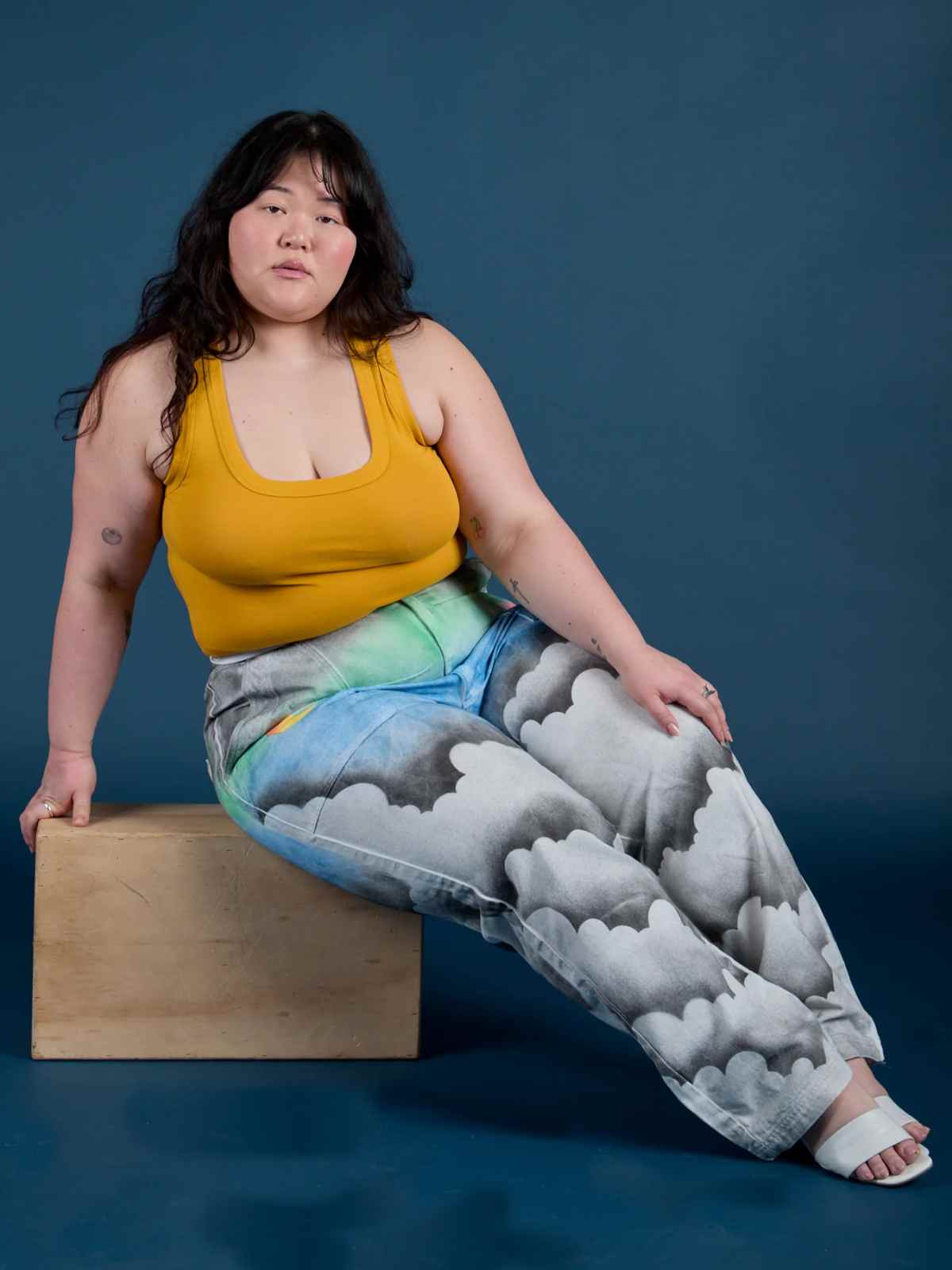



There’s a misconception that building a more sustainable and ethical wardrobe costs a lot, but doing it on a budget is entirely possible with a mix of rethinking how and where you shop, and taking another look at the things you already own. Here, we’re sharing how you can shop and dress more sustainably without spending loads.
A sustainable wardrobe on a budget? It’s totally doable
If you’re worried that your budget might compromise your ability to embrace ethical fashion then you’re not alone. In a world that often pits financial constraints against the desire to shop responsibly, finding a middle ground can seem challenging. Contrary to what the narrative might be, to build a more sustainable you don’t need to throw out everything you own and buy similar items from better brands. In fact, the most sustainable fashion items are the ones you already own.
It’s true that new items from more ethical fashion brands can sometimes come with a higher upfront price tag than fast fashion, but that accounts for quality materials and manufacture, paying people in the supply chain properly, design for longevity, and much more. This is often where the belief comes from that more sustainable fashion isn’t attainable for those on a budget, but here, we’re proving that wrong.
From revamping your existing wardrobe to embracing secondhand treasures, we’ll explore practical strategies for mindful fashion consumption. Learn how to make the most of your clothing, be environmentally-conscious during the laundering process, and discover the impact of better fibres on sustainability.
Here are our top tips for creating a more ethical wardrobe without busting your budget.
First, make sure you know your own style
Regardless of how much you have to spend, the first part of creating a more sustainable wardrobe is understanding your own style and aesthetic—knowing what you like and feel happiest in. This helps you know what to keep when sorting through your closet, and it helps when you need to buy something new and are faced with reams of clothes on Vinted or in a thrift shop. It also means you’re better placed to resist the pull of viral items on social media, and less likely to invest in unsustainable fleeting micro trends.
Try adding your favourite items and looks to a moodboard, photograph your outfit on days you feel great in what you’re wearing, and look beyond social media outfit inspiration, since these are often driven by current trends. Instead, look to the artists, movies, music, and things you love most, and consider how they influence you to get dressed.
Fall back in love with your wardrobe
The most sustainable item of clothing is the one you already own, which means there’s no use throwing out the existing clothing in your wardrobe (yes, even if it’s fast fashion) in the name of building a collection that’s more ethical. It’s time to fall back in love with your wardrobe. Set aside time to be creative with these pieces: style them with different accessories and reinvent them (more on that below). Find the hero items that always make you look and feel great and commit to wearing them in as many different outfit combinations as you can come up with.
Catalogue your wardrobe
Making a digital archive of your existing clothes, shoes, and accessories can be really helpful in trying out new outfit combos, seeing how much you’re wearing specific items, and getting an overview of the common colours or features in your wardrobe. There is a handful of great wardrobe organising apps out there to make the process easy, such as Whering, Indyx, and Acloset. This one requires some time investment, but the ability to plan outfits ahead of time and see your entire wardrobe might just help you see that your existing items are all you need.
Learn how—and when—to launder your clothes
The consumer use phase, ie wearing, storing, maintaining, washing, and drying all the clothes you buy, is a key contributor to the overall energy consumption and GHG emissions associated with clothing, not to mention that washing some clothes can release microplastics. Doing laundry better is an essential step to keeping your clothing around for longer and reducing your impact.
Invest in good clothes hangers
Most plastic and wire hangers will stretch out the shoulders of your tops and leave you with saggy clothing. Despite being a little more expensive, wooden hangers will last longer and take better care of your garments. For more tips on caring for your clothes, check out our ultimate guide to clothing care..
Take clothes in need of repair to the tailor
Tailoring is the ultimate sustainable style tip: a new zip or an extra inch on the waist will set you back as little as $30. Or why not empower yourself by learning those skills yourself? There’s nothing quite like the feeling of adding a new skill to your repertoire. Learning to sew, repair, and re-fashion your own clothing puts the power back in your hands. Here’s three simple tricks to mend your clothes from Fashion Revolution founder Orsola de Castro.
Upcycle, upcycle, upcycle
Upcycling is a way of tweaking an item to make it even better than the original. This means taking something that doesn’t fit or is stained/torn and refashioning it as a fabulous new piece. There’s a wealth of upcycling videos on social media, or you could take a class at your local community college.
Taking control over your wardrobe also means you no longer have to put up with clothing that “just isn’t quite right”—you can tweak things as your style changes, getting optimum wear from your well-loved items.
Invest in quality pieces
Resisting the impulse to buy huge numbers of cheap items in favour of investing in quality pieces not only makes your look more streamlined, it also reduces the amount you consume overall. Saving your hard-earned dollars for quality is really a win-win.
Although shopping at more responsible retailers may seem like a more pricey up-front commitment, taking the time to curate a careful and worthwhile wardrobe of items you love will be much gentler on your wallet—and the planet—in the long run.
Create a list of items that you’d be ecstatic to own. Focus on quality—which doesn’t just mean more expensive. It can include organic materials, well-made rather than on-trend, perfect-fitting, and preferably made by a brand that makes an effort to be more ethical and sustainable. As well as being better for the planet, people, and animals, higher quality pieces will often last longer due to superior materials and overall construction.
Start by browsing clothing online while checking brands’ ratings using the Good On You directory or app. Place the items you want in your virtual cart, add them to the wishlist feature on the sites, or create a Pinterest board. Pin images that include what you have in your wardrobe so you can see how they’d all work together. The more you mull over the options and revisit your choices, the more certain you’ll be to love the pieces you finally end up purchasing.
Shop secondhand
There are already enough clothes on the planet to dress everyone. Just think of the mountains of fashion waste piled up in Ghanaian wetlands and Chile’s Atacama desert. For every trend that comes around in the fashion cycle again, there are already countless pieces of clothing that still exist from the last trend cycle, and many can be found with a simple search on platforms like eBay, Vestiaire Collective, or Vinted.
Bricks-and-mortar thrift, charity, and op shops are also a treasure trove for those looking for something no one else will be wearing. Buying secondhand from a local market means you’re not only recycling clothing and accessories that might otherwise end up in landfill, you’re supporting local enterprise and giving back to the community.
Go for non-synthetic fibres
Non-synthetic fibres (we’re talking cotton, linen, hemp, wool—preferably recycled or secondhand) tend to require less laundering, especially in summer. You can just hang your clothes out to air overnight, and they’ll be fresh come morning. Unless something is visibly dirty or on the nose, take the challenge to wear your garments at least three times before they hit the laundry. If you’re not sure where to start, check out our ultimate material guide.
Consider rental fashion for occasionwear
Buying a new dress or suit for a specific occasion is sometimes required, but you don’t want a wardrobe overflowing with barely worn formalwear or a maxed out credit card from buying unaffordable clothes. Clothing rental is the solution, here. There’s a huge variety of fashion rental businesses that provide designer dresses and accessories, like GlamCorner in Australia, in the US with Rent The Runway, and in Europe and the UK with HURR and By Rotation. You can also browse most sites by occasion and designer to give you some inspiration.
Swap your clothes
Fun and free ethical wardrobe additions? Yes, please. Clothes swapping is another more sustainable way to find a new outfit without spending a cent, and it’s also a great opportunity to meet others who care about a more ethical lifestyle. Swap events can be big formal affairs or just a casual get together with you and friends. For example, The Clothing Exchange hosts events in venues around Australia with guidelines to ensure everything is fair and fun. Keep an eye on your council’s community events page for swaps happening in your neighbourhood, or better yet, organise one yourself.
Build a capsule wardrobe
A capsule wardrobe refers to a small collection of seasonally appropriate clothes that can be mixed and matched thanks to their colour palettes, silhouettes, and materials. It’s about optimising the versatility of the items you own, ensuring plenty of outfit combinations and removing some of the decision paralysis that comes with looking at a wardrobe full of clothes in different styles. If you’ve done the work to understand your own style, then you’ll find building a capsule wardrobe easier.
Wait for discounts
While many well-made fashion brands can be pricey, most companies host amazing deals at some point during the year. Stalk the sale sections in stores and online. Sign up for emails to receive coupon codes, and befriend shop owners to find out when sales are approaching. Add the items you love to your wishlist throughout the year so you’ll know if and when they go on sale, and you’ll avoid making impulse purchases during sales periods, too.
You can also shop off-season for the best prices. Stock up on your winter jumpers in spring so that you’re prepared when winter rolls around again. Make sure you check out our special offers for a weekly selection of offers from better brands which have first been independently rated by our sustainability analysts.
Remember to shop sales responsibly, though, and not use them as an excuse to overconsume. If you have curated a list of key items you need for your wardrobe and you still feel the gap by the time a sale comes up, you know it’s a good time to invest.
Put Good On You to good use
Want to understand which brands are doing better by people, the planet, and animals before purchasing? We’ve done the research for you. Check our easy-to-understand brand ratings using the Good On You directory or app. You can also use our price, location, and category filters to discover top-rated brands making items that match your needs.
If you don’t like what you discover when checking the brands you typically shop from, see our suggestions for similar brands that do better, or send a message to the brand asking them to do better. While we typically recommend supporting brands rated “Good” or “Great”, sometimes an “It’s a Start” brand may better meet your needs when building your wardrobe, and that’s okay. Progress over perfection. That’s the phrase to keep in mind here, and more broadly when you’re building a more responsible wardrobe.