




In the news this month: An Indonesian garment workers’ union sees victory, Louis Vuitton’s giant waterfall draws criticism, and numerous “misleading” fashion brand ads are banned.
In Sweltering Paris, Louis Vuitton’s Waterfall Show Draws Scrutiny (Reuters)
In the midst of a record-breaking heatwave in Paris, Louis Vuitton held a fashion show with a giant artificial waterfall outside one of the city’s most prominent student accommodation complexes. The brand said the water had been sourced from Paris’ water supply and would be returned in a closed-loop system, but many industry and local figures criticised the installation, with students noting that “the show underscored a stark gap between extreme wealth and their own living conditions,” according to Reuters.
Adidas, Uniqlo and Calvin Klein Ads in UK Banned Over ‘Recycled’ Clothing Claims (The Guardian)
The UK’s Advertising Standards Authority (ASA) has banned adverts by adidas, Uniqlo, and Calvin Klein over claims about “recycled” clothing and shoes, noting that they lacked clarification about how much of the product was recycled, and that without more specifics, the claims could be misleading. It’s part of the ASA’s wider investigation into environmental claims made by fashion brands, according to The Guardian.
SHEIN and Paris Department Store End Controversial Partnership (Reuters)
Reuters reports that SHEIN’s partnership with Paris department store BHV has ended, with a representative from the latter describing it as a mistake. The controversial link-up prompted protests in Paris and caused some brands operating in BHV to leave the store.
France’s Anti-Fast-Fashion Law: Campaign Groups Criticise the Measure as Too Narrowly Focused on Ultra-Fast Fashion (Fashion Network)
In mid-June, French lawmakers reached an agreement on a bill aimed to curb fast fashion, but industry organisations and the Stop Fast-Fashion coalition has since criticised it, noting that it is too vague and hard to enforce, and that it focuses too much on ultra fast fashion while leaving conventional fast fashion brands out of the legislation’s reach.
Inaccurate Clothing Labels a Systemic Issue, EU Testing Finds (European Commission)
An investigation by the EU Commission has found that fibre composition labels on clothing are not always accurate, with a 39% failure rate across 132 items tested. Issues discovered include incorrect fibre percentages, different or cheaper fibres than mentioned on the label, and fibres being incorrectly declared or named. The report advises consumers be cautious of “very low prices, or deals that seem too good to be true, and to prefer products where the manufacturer’s name, address or website is mentioned on the label. This ensures accountability and traceability.”
Why Fashion Is Falling Behind on Its Climate Targets (Business of Fashion)
For Business of Fashion, Shayeza Walid reports on fashion’s slowing progress in cutting emissions, analysing brands’ actions and investigating what it will take to get the industry back on track. Alongside challenges in the wider corporate landscape, the report cites a lack of a clear roadmap to implementation and few consequences for missing goals as some of the reasons why the industry is lagging.
What Happened to Refillable Beauty? (Vogue Business)
On the occasion of World Refill Day, a Vogue Business report tracks the state of beauty’s refillable products landscape, identifying L’Oréal as a leader in the space and analysing what makes consumers invest in refillable products. Some key factors are convenience, consistency, and creating original packaging that consumers want to keep.
The World Cup Is a Milestone Moment for Recycled Polyester (Business of Fashion)
Many team kits in this year’s World Cup are made using textile-to-textile (T2T) recycled polyester: a departure from the more common use of plastic bottles-to-textile recycling process. Business of Fashion investigates whether this is enough to signal demand for scaling the technology to recyclers, and notes the caveats that while this is good, ultimately, football merchandise is centred around overconsumption. As well, much of the T2T polyester is derived from post-industrial waste, which doesn’t solve the huge issue of post-consumer textiles being sent to landfill.
Inside On’s Supply Chain: Pricy Shoes, Underpaid Workers, and a Fearless Union (Public Eye)
Public Eye reports on a rare trade union victory in Indonesia, in which 64 factory workers were reinstated after being dismissed by a facility that supplies sportswear to the likes of On Running. This report explores the realities for workers in Indonesia, where sportswear production is booming.
What it Takes to Make Less Toxic Performance Wear (Vogue Business)
Journalist Sophie Benson explores the challenges in making performance wear, which typically relies on synthetics and chemical coatings to achieve characteristics like water repellence and moisture wicking, and the brands and materials that are working to do things more sustainably.
Signs of Progress: Lululemon Announces Supply Chain Renewable Energy Investment Fund (Action Speaks Louder)
Action Speaks Louder shares an update following its mumumelon campaign, which highlighted Lululemon’s poor environmental record. The activewear retailer has announced a new renewable energy investment fund to enable its suppliers in China to access renewable electricity from wind and solar developments. “When brands put their money where their mouth is and support real, credible solutions to fossil-fuelled supply chains, it’s a sign of the ‘do-say’ gap on climate starting to close,” Action Speaks Louder says in a blog post.
‘Good’ and ‘Great’ news
Every month we publish news and product highlights from highly rated brands that have been assessed by our rigorous ratings system. Using our codes and links may earn us a commission—supporting the work we do. Learn more.

Lefrik Links Up With Artist Coco Dávez for Colourful Collab
“Great”-rated bags brand Lefrik has partnered with artist Coco Dávez for a colourful collaboration “transforming everyday pieces into expressive statements […] where art meets everyday movement.” Each of the five vibrant green and pink bags is made in the brand’s usual more sustainable approach and will make a great talking point.
Swedish Stockings Transforms Used Stockings Into Beautiful Garments with Sylvi Sundkler
In partnership with the brand Sylvi Sundkler, “Good”-rated Swedish Stockings has created a top, corset and dress made from nylon stockings that were collected through its Recycling Club, which aims to give worn-out tights a second life. Each garment is made by hand and to order.
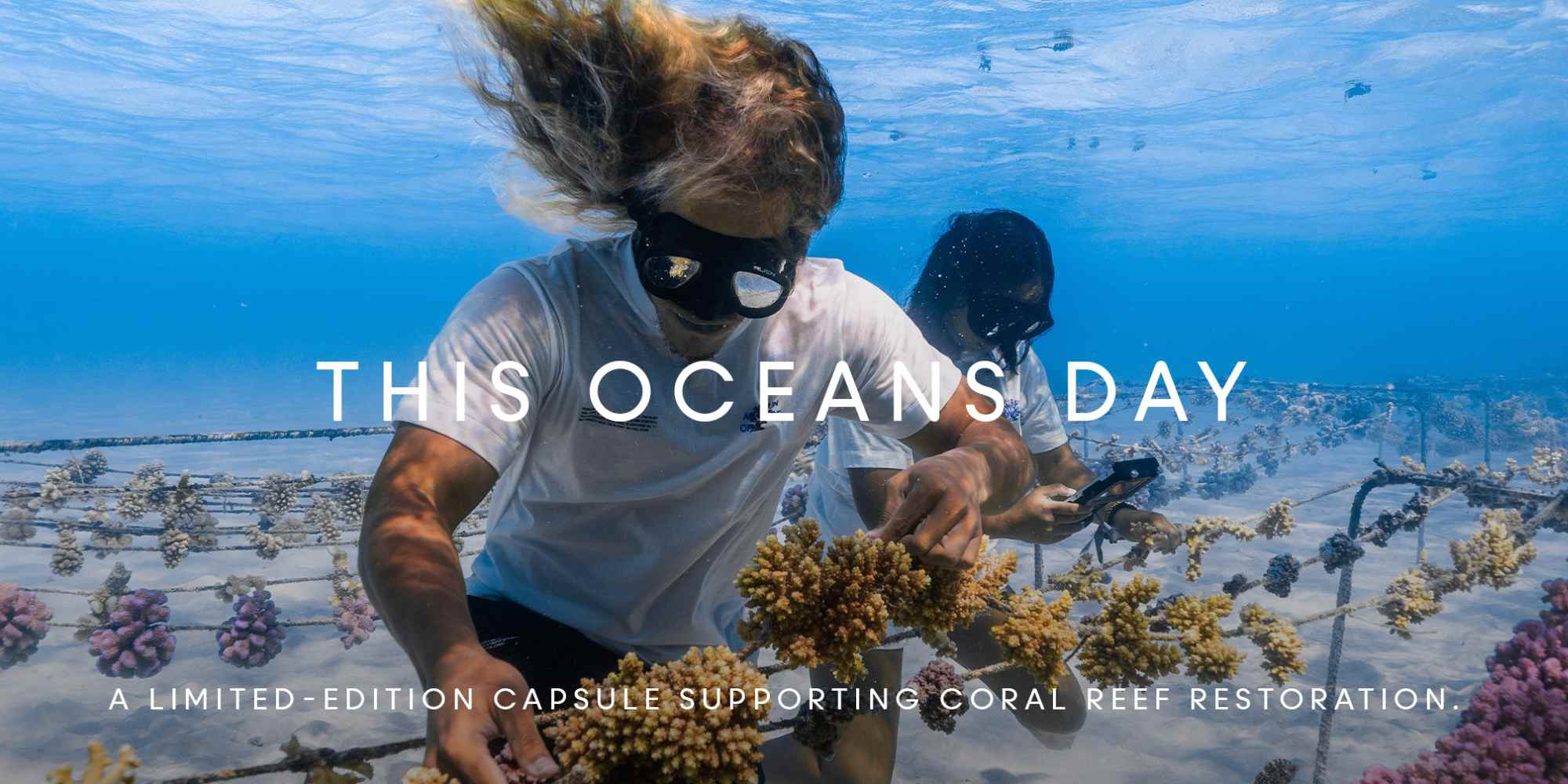
PANGAIA Partners With Coral Gardeners on Capsule Collection
Top-rated “Great” brand PANGAIA is collaborating for the second time with Coral Gardeners, an organisation that works to restore coral ecosystems and reffs around the world. For every sale of the hoodie and T-shirt in the collection, Pangaia will donate to the organisation.