


Our editors curate highly rated brands that are first assessed by our rigorous ratings system. Buying through our links may earn us a commission—supporting the work we do. Learn more.
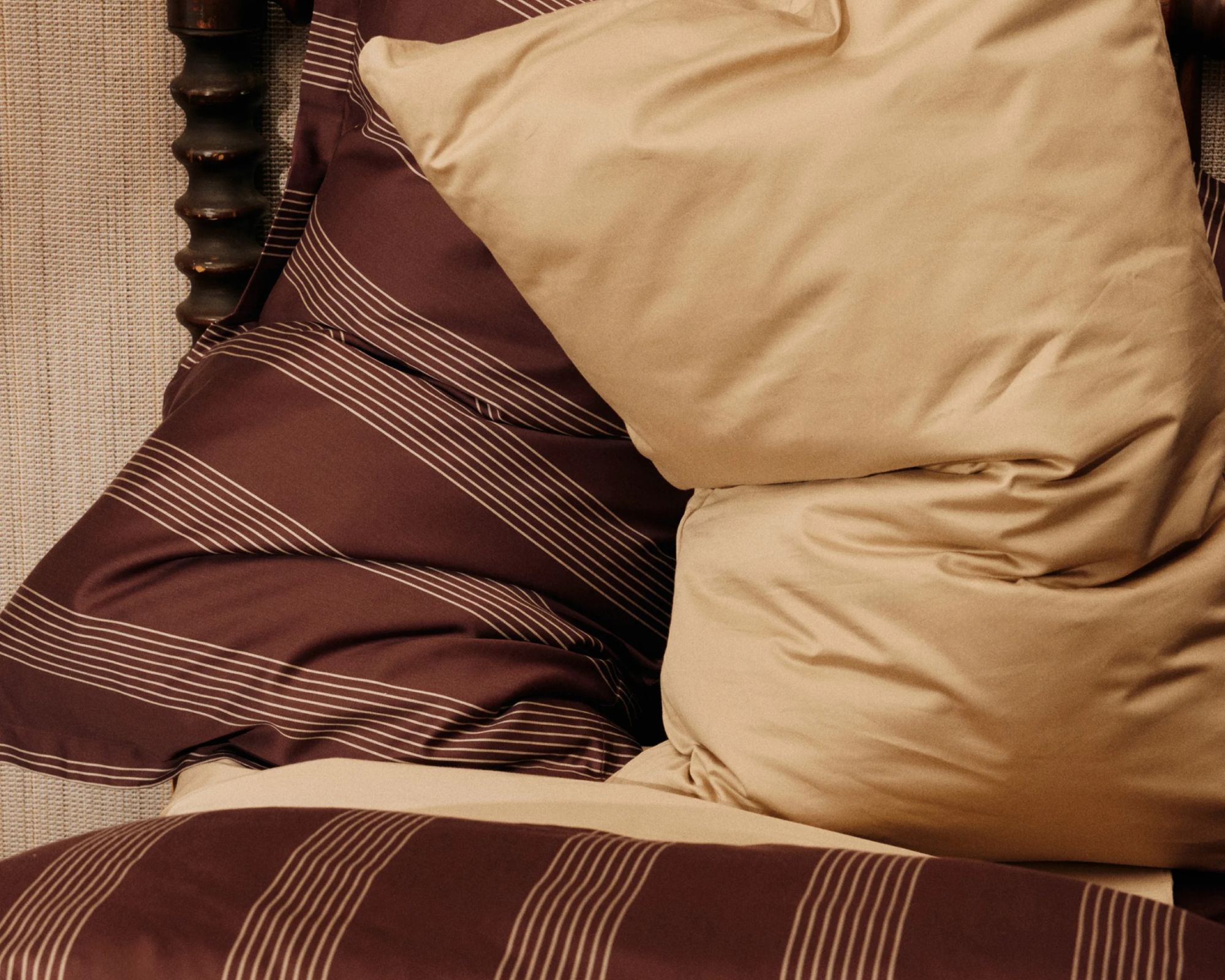
More sustainable bedding is worth the investment because it often uses organic materials that avoid harsh chemicals and synthetic fibres that aren’t breathable. Brands like Bhumi, ettitude, Kotn, and No Nasties are some of the top-rated brands in our directory making blankets, quilts, pillowcases, and more. Scroll on to discover our full list of options.
The benefits of buying more sustainable bedding
Did you know humans spend an average of 33 years in bed? That’s over a third of our entire lifetime curled up under the covers. And while sleep and relaxation are crucial for a well-functioning body and mind, beds and bedding are notorious for harbouring more bacteria than we care to admit. Cheap bedding is also often made with unsustainable synthetic fibres like polyester that don’t allow your skin to breathe.
Shoppers are also becoming more aware of the fabrics they put next to their skin and the dangers of overexposure to synthetic or chemical-laden fabrics. While Good On You’s brand ratings don’t consider consumer health impacts directly, they do assess brands’ use and management of chemicals, and their use of synthetic fibres.
More sustainable bedding is usually made with high-quality, organic, and plant-based fibres that are breathable and avoid harsh chemicals. Fibres like linen are hypoallergenic, airy, and temperature-regulating. On top of that, the brand making the bedding should be taking appropriate actions on key sustainability issues in its supply chain, because addressing just one area, like materials, isn’t a sufficient sustainability strategy. We expect to see initiatives such as paying living wages, managing water use and disposal, and implementing strong policies on animal welfare or committing to being vegan.
With that, then, here we’re sharing the brands making bedding, quilts, and more, that are rated “Good” or “Great” against Good On You’s methodology for their actions on key sustainability issues across the pillars of people, the planet, and animals.